An Architecturally based blog from a 3rd year BA(Hons) Architecture student from the Arts University College Bournemouth (AUCB). Focusing on the major projects from the year and discussing key issues within the world of Architecture.
Monday, May 23, 2011
Thursday, May 19, 2011
Final Project Images.
A few images to sell the concept of the project of Anatomy - building the sense to community and togetherness through visually displaying views to make the residents aware that are normally blinded by familiarity.
Wednesday, May 18, 2011
Architecture that people can use.
Procrastination can spur on some interesting thoughts. How about spaces that are fully usable rather than just retaining walls.
A big kid's version of Lego.
Thursday, March 10, 2011
Site Visit.
The new project to sink our teeth into is a Hotel based project located on Bournemouth seafront. The site is approximately 180 meters long and 35 meters wide, this gives a great depth to what can be envisaged on site.
Here are a few images to show the site and the hideous eye sore of the IMAX cinema.
Some of the images show different weather conditions and this in itself can have varied effects on the site.
The site is a challenge due to the close quarters of the fly over, however this could be used to the advantage of the hotels privacy and access.
Tuesday, February 15, 2011
John Pawson Exhibition.
In January John Pawson held a design space exhibition in the Design Museum in London. The exhibition was interesting because of the concept of the space he explores, using a small palette of colour and materials cleans the space and makes it enjoyable to occupy.
An fascinating concept model where the context of the landscape has been cut to show an approach to the site.
A hotel project in Morocco, this uses an interesting effect on solar gain for the windows from the below image you can see that the window spaces do not look as though they are mesh. The interior still allows light in but at a controlled rate.
The last few images are important because they link to the previous project that was completed on Light, Shape and Colour. this proves how light can be used to clean spaces and accentuate details. Viewing this exhibition has cleared up what spaces need to be like to make them enjoyable for the users of them.
Thursday, December 09, 2010
The Senses.
We all know that the senses are the five ways we get through life, Sight, Touch, Hearing, Smell and Taste, they help in recognising what is in front of us. In the project that has covered the last eight weeks you could say that Light, Shape and Colour could replace the senses, but only when viewing things. To explain this further if you look at the first three images carefully, your mind will slowly gather objects and landscapes you have seen previously and re-map them over these images so they become recognisable to your brain. This happens because when one part of the image has been removed the others gain extra abilities to enhance to remaining qualities.
Tuesday, December 07, 2010
LSC. (Light, Shape, Colour)
LIGHT + SHAPE = NO CONTRASTS (Black and White)
LIGHT + COLOUR = NO DEFINITIONS (Objects are not Clear)
SHAPE + COLOUR = BLURRED VIEW (No Depth)
This way of removing an individual word can create an extra three topics, when thinking of these in this way in allows you to understand how the original topics can work. Within architecture this can be an interesting method or design process, to see how certain things work with another.
![]() |
| Daniel Libeskind Imperial War Museum. |
As shown above Daniel Libeskind uses a method in designing the Imperial Way Museum. He takes an object, in this case a globe, breaks it up and re-arranges it to produce the building. This could be done by using the topics from my project to create an architectural proposition to be placed back within the Chine, or any site with this depth of research and analysis.
Monday, December 06, 2010
Light: The Most Important and Least Relevant.
The title does seem a little odd because from the chosen topics light is the one that doesn't seem as relevant to the other two. Purely because it is hard to pin point how to describe light in design. Peter Zumthor describes the light in a much more spiritual way, and how it is a reason to start and end each day, it also carves the path that we take each day through natural and artificial light. As well as giving us paths it can also inform design and the way in which buildings are orientated and which spaces are used for certain activities.
![]() |
| Peter Zumthor. The light of Things. |
| Sunny Day Bournemouth Chine. |
![]() |
| Digimap Image of how a Sunny Day in Bournemouth would feel. |
![]() |
| Fog on a freeway in America. |
![]() |
| How the Fog would make the Bournemouth Gardens feel. |
Friday, December 03, 2010
Architecture: Can you make it?
A question I have asked myself recently is do you have go the whole way with the 7 years of Architecture to make it successful? Some famous architects know that this is not the case for example, Le Corbusier, Mies Van de Rohe and Frank Lloyd Wright all did not graduate from a School or University of Architecture.
Brad Pitt is a better example of this because he is an actor that has taken to architecture, he studied it but never graduated. He managed to become friends with Frank Gehry through him designing a wine store in his $14 million home. This makes an extra question of its not what, but who you know to allow you to become successful. Brad Pitt has worked on a 5 star resort in Dubai and also the example below of a leisure complex in East Sussex, England. Both of these created through working in collaboration with Frank Gehry's Los Angeles practise.
![]() |
| Brad Pitt. |
![]() |
| Pitt with Canadian Architect Frank Gehry. |
![]() |
| Leisure Complex, Hove, East Sussex. |
Brad Pitt is quoted to say that 'whilst acting is my career, architecture is my passion'. From this it can be said that it is possible to do whatever you would like with an intense desire to succeed.
Thursday, December 02, 2010
England Vs Russia.
In the midst of todays footballing events I thought I should touch on the architecture of these 2 countries. The history of the 2 date back many years but to think quickly the stand out architecture of Russia is the Constructivism and the Churches and Cathedrals of Renaissance Russian Architecture.
![]() |
| St Balis Cathedral, Russia. |
England is more renowned in the same era as having a Gothic Revival Architectural movement which can be seen in the Churches and Cathedrals and also the parliament buildings in Westminster, London.
![]() |
| Houses of Parliament, London. |
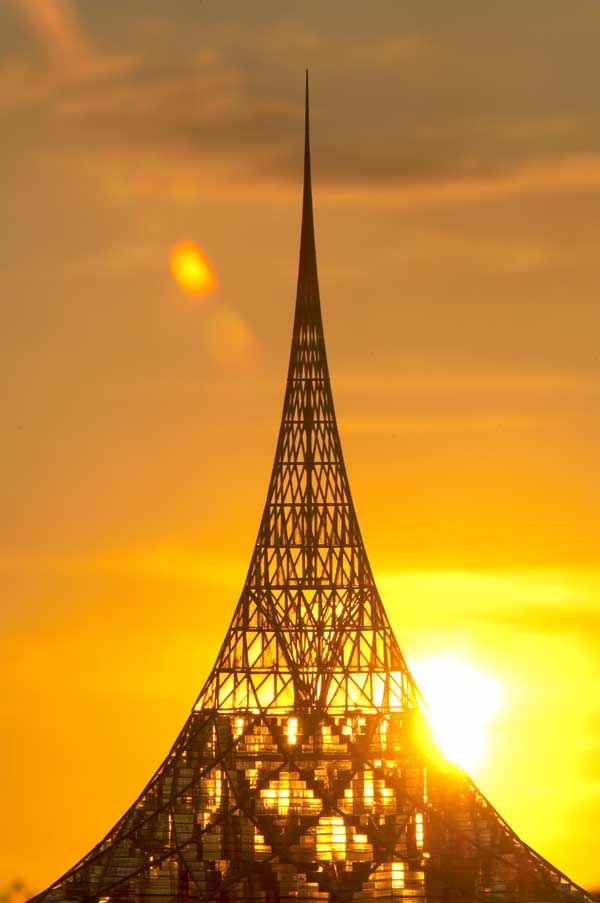
Although this being said, the new modern forms or architecture there are little if not no modern Russian architects developing the world. On the other hand the English architects are doing their best to improve our everyday lives. The example below is by Fosters and Partners, and another building our architects are giving back to Russia.
![]() |
| Crystal Island, Moscow. |
![]() |
| Crystal Island, Moscow. |
So sure, Russia have 'taken' the 2018 World Cup off of the more worthy candidates but we know that we can produce the better products.
Wednesday, December 01, 2010
Snow.
A talking point today is the heavy snow fall we had last night, and the now clean white environment we have woken up to. After some midnight snow-balling, the snow has brought out the inner architect in everyone. From the simple crafting of the perfect snow ball to the creation of snowmen in many gardens around the country.
![]() |
| Snowman |
The slightly more extreme crafting of the snow that has fallen can even allow us to be much more creative rather than building the normal snowman.
![]() |
| Casper Omid Arbababamin, Bristol. |
However, Japan has a slightly better, more professional approach with their yearly Snow Festival in Sapporo that my brother was luckily enough to go. It really shows the extremes that can be reached with the simple white stuff that has fallen in England over the last day.
Tuesday, November 30, 2010
Random Creations?
The project I am working on at the moment of Light Colour and Shape(LCS) is producing external influences to describe the findings within a selection of final pieces. Some example of the ideas that could link well with my focus topics(LCS) are listed below, they are not listed in date order because they are showing the complexity levels of the art.
![]() |
| Mark Rothko. Light Red Over Black. 1959. |
![]() |
| Juan Gris. Glass and Bottle. 1919. |
![]() |
Georges Braque. Gueridon. 1913. |
![]() |
Jackson Pollock. The She Wolf. 1943. |
![]() |
Lyonel Feininger. Bartusserkirche. 1924. |
![]() |
Daniel Libeskind. Imperial War Museum. Completed 2002. |
All of the examples predominantly use Colour and Shape to describe the artists thoughts and this is what makes these pieces so interesting. They are not just a random collection of ideas, they use different methods of delivery to allow them to come across as carefully constructed pieces of work.
Subscribe to:
Posts (Atom)